Most writers don’t need another pep talk about discipline. They need a place to put the plot. These eleven book writing templates and systems each solve a slightly different problem, so I’ve ranked them by usefulness rather than fame, with a note on who each one actually suits.
- Save the Cat! Writes a Novel by Jessica Brody: The #1 spot goes to this book-based system, which provides a detailed step-by-step process to create your novel structure. Derived from Blake Snyder’s popular “Save the Cat!” screenwriting method, it offers 15 key plot points (beats) to guide your storytelling. The catch is that the beats are prescribed, so it suits writers who want to be told where the turns go rather than invent them.
- Snowflake Method by Randy Ingermanson: This method advocates starting from the simplest possible version of your story and gradually adding complexity. It’s great for developing characters and plot in a structured, organic manner. Expect to spend a few sessions on it before you write a line of prose.
- The Hero’s Journey by Joseph Campbell: This classic template follows a universal storytelling structure used in countless books and movies. It’s an ideal choice for writers working on a hero-centric, adventure-based narrative, and less help if your story has no call to adventure in it.
- Story Engineering by Larry Brooks: This book offers a comprehensive approach to writing, including a detailed analysis of story structure, character development, theme, and more. The Six Core Competencies of Successful Writing is particularly useful.
- Three Act Structure: This is a classic storytelling template that divides the narrative into Setup, Confrontation, and Resolution. It’s straightforward, easy to follow, and can be applied to virtually any genre. Use it as the frame under any of the others.
- Freytag’s Pyramid: Based on classical drama, this template includes exposition, rising action, climax, falling action, and denouement. It’s particularly useful for writing stories with a dramatic arc.
- The Writer’s Journey: Mythic Structure for Writers by Christopher Vogler: This book is a guide to the patterns of mythology. It’s a more detailed version of The Hero’s Journey and provides an excellent template for writers creating complex, myth-inspired narratives.
- Novel Factory’s Roadmap: This online writing tool includes an extensive range of templates, character questionnaires, and plot structure outlines.
- Story Grid by Shawn Coyne: This is a method for deconstructing your story into its elements to analyze and improve it. It’s a great tool for those who enjoy a more analytical approach to writing, and a heavy one if you’d rather draft than diagnose.
- One Page Novel Scene Spreadsheet by Eva Deverell: This online resource offers a simple, streamlined way to plan your novel on a single page. It’s the one I’d hand to a writer who has tried three systems and abandoned all of them.
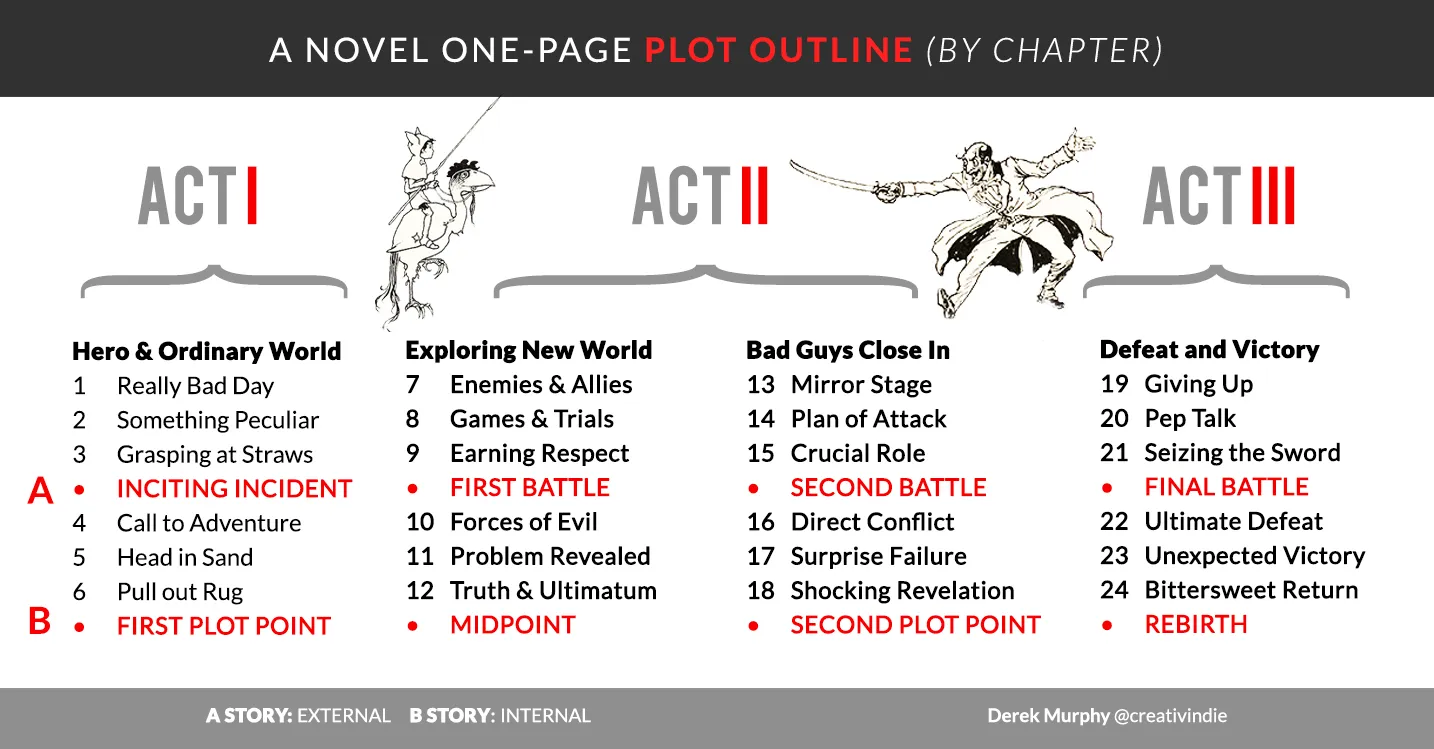
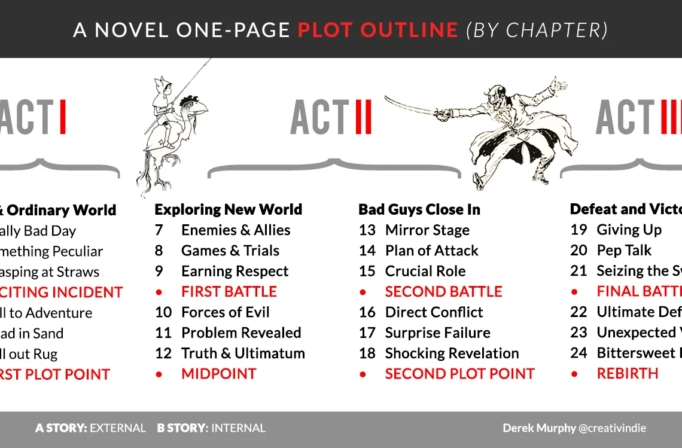
- The 24 Chapter Novel Writing Template by Derek Murphy: This detailed outline fills in the messy middle so you have a clearer pacing and momentum in your story.
Remember, the best method will ultimately depend on your personal writing style and the type of story you’re telling. Feel free to experiment and combine different systems until you find the one that works best for you.
Which book writing template should you start with?
If you’re drafting your first novel, start with the Three Act Structure and add Save the Cat! when you need exact turns. If you already have a draft that sags in the middle, Story Grid will tell you why faster than a beta reader will. And if planning itself is the thing you keep avoiding, the One Page Novel Scene Spreadsheet is the least intimidating place to begin.
One small piece of publishing trivia worth knowing: the three-act structure has outlasted almost every writing trend because it maps onto how readers read, not how writers wish they wrote. You can bend it, but you’ll notice when it’s missing.
If you’re planning the publishing side once the draft exists, our invoice templates for small businesses are a dull but useful way to bill for freelance work while the book sits in a drawer.